Adapalene vs Tretinoin: who reigns supreme?
Among the retinoids, tretinoin is arguably one of the most potent and certainly the most widely investigated for the management of photoaging.
Somewhere along the way, Adapalene is slowly taking the spotlight. However, precisely what is adapalene? Is adapalene another trendy ingredient that is here today and gone tomorrow?
This article will aim to explore:
- Why are there so many different topical retinoids?
- What is Adapalene?
- Adapalene vs Tretinoin - which is better for me?
Why are there so many different topical retinoids?
Tretinoin is the most widely studied retinoid for photoaging. In fact, Tretinoin was the first retinoid studied for hyperpigmentation in individuals with melanin-rich skin. A 40-week double-blind study included 68 black men and women who had dark spots from acne, shaving issues, eczema, ingrown hairs, and folliculitis. Results showed improvements with tretinoin 0.1% cream starting at week four. However, 50% of those treated experienced skin reactions causing unwanted pigmentary changes (the opposite of what we want). Consequently, chemists developed weaker tretinoin formulations and other milder retinoids to address unwanted pigmentary changes.
The milder retinoids include retinyl esters, retinol and retinaldehyde, which are all converted to tretinoin by the body. They are less irritating and less potent, with retinyl esters being the least potent.

What is Adapalene?
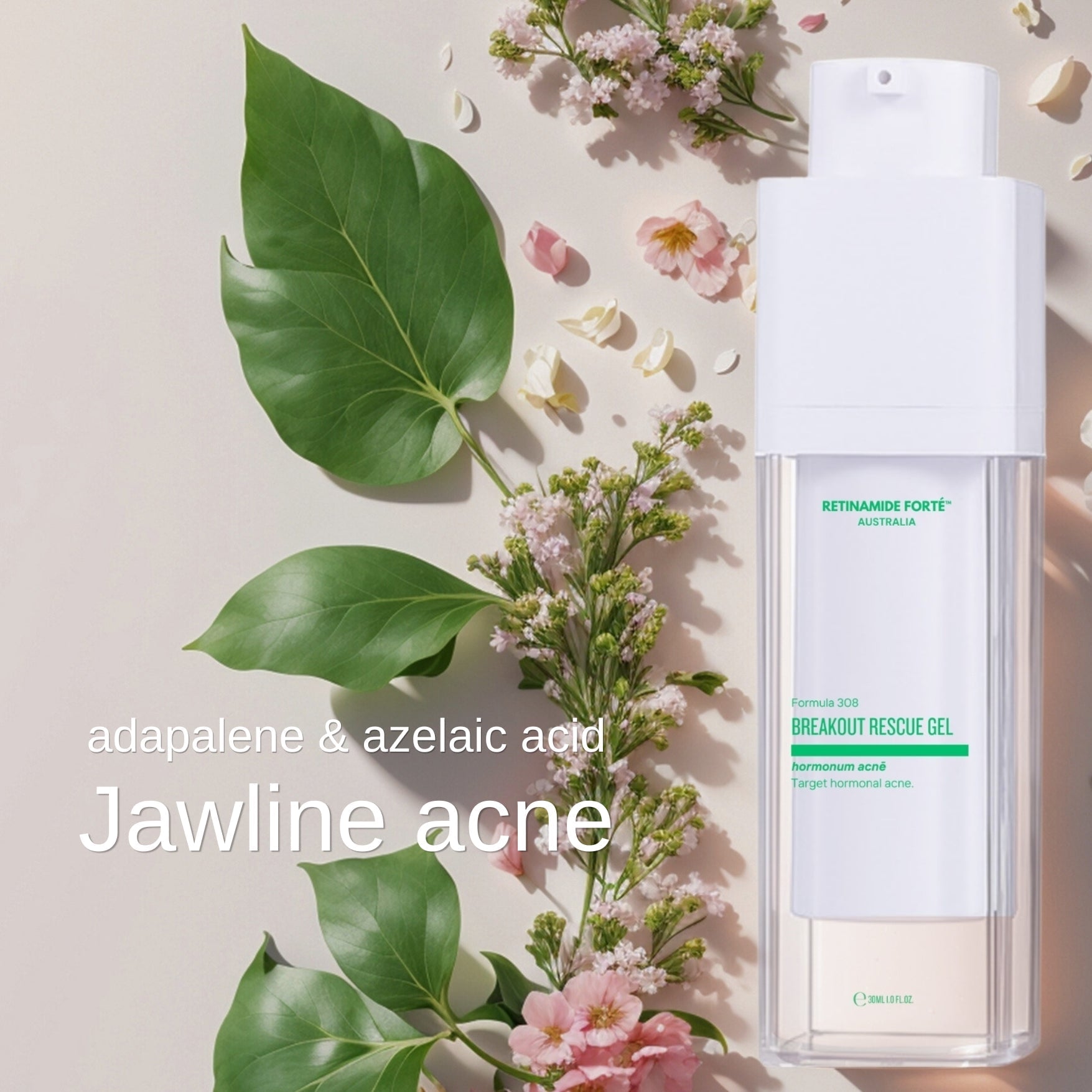
Adapalene is a third-generation retinoid. Thanks to its receptor selectivity, adapalene causes less skin irritation compared to tretinoin, but ...
Tretinoin vs adapalene - Is adapalene as effective as tretinoin?
To determine whether adapalene is as effective as tretinoin, we need to look at the end goal. Retinoids are commonly used to reduce wrinkles, treat acne, melasma and hyperpigmentation (including age spots).
A 2002 study found that adapalene 0.1% gel was as effective as tretinoin 0.05% cream and was better tolerated in patients with mild-to-moderate acne. This study was a randomised controlled trial involving 409 patients over ten weeks. Adapalene showed significantly less potential for stinging, redness, dryness, and flaky skin than tretinoin.
Additionally, a meta-analysis of 900 patients with mild-to-moderate acne (450 treated with adapalene 0.1% gel, 450 treated with tretinoin 0.025% gel) showed that adapalene was faster at reducing inflammatory lesions at week 1 compared to tretinoin.
In terms of reducing total lesion count, adapalene 0.1% demonstrated equivalent efficacy to tretinoin 0.025% gel.
Why is adapalene better than tretinoin for acne?
Thanks to its selective receptor subtypes, adapalene has proven to be more effective than tretinoin for managing acne and post-inflammatory hyperpigmentation.
Now you are probably wondering if receptor selectivity is really that important. Receptor selectivity is crucial for treating specific conditions. For example, Tazarotene, another third-generation retinoid, has a different receptor preference and is more effective for managing psoriasis.
Adapalene 0.1% gel can be purchased over the counter without a prescription, thus reducing costs and treatment delays.
Tretinoin vs adapalene for photoageing
To date, no large-scale clinical trials have compared tretinoin with adapalene for the management of photoageing. For this reason, tretinoin remains the drug of choice for treating stubborn sun spots, melasma, and wrinkles. That doesn't mean adapalene doesn't improve collagen production or reduce wrinkles; it's just not as efficient as tretinoin because it's busy attaching to acne lesions.
If acne and acne marks are your primary concerns, adapalene has been shown to be more effective for mild-to-moderate acne.
If anti-ageing is your primary concern, then tretinoin remains the drug of choice. With this in mind, we are confident that adapalene is not another trendy ingredient with bold claims, but serves a crucial role in managing acne.
REFERENCES
- Mukherjee, S et al. Retinoids in the treatment of skin aging: an overview of clinical efficacy and safety. J Clin Interv Aging. 2006 Dec; 1(4): 327–348.
- Callender, V.D., Baldwin, H., Cook-Bolden, F.E. et al. Effects of Topical Retinoids on Acne and Post-inflammatory Hyperpigmentation in Patients with Skin of Color: A Clinical Review and Implications for Practice. Am J Clin Dermatol 23, 69–81 (2022). https://doi.org/10.1007/s40257-021-00643-2
- Bagatin, E et al. Comparable efficacy of adapalene 0.3% gel and tretinoin 0.05% cream as treatment for cutaneous photoaging. European Journal of Dermatology, 28, 343-350.